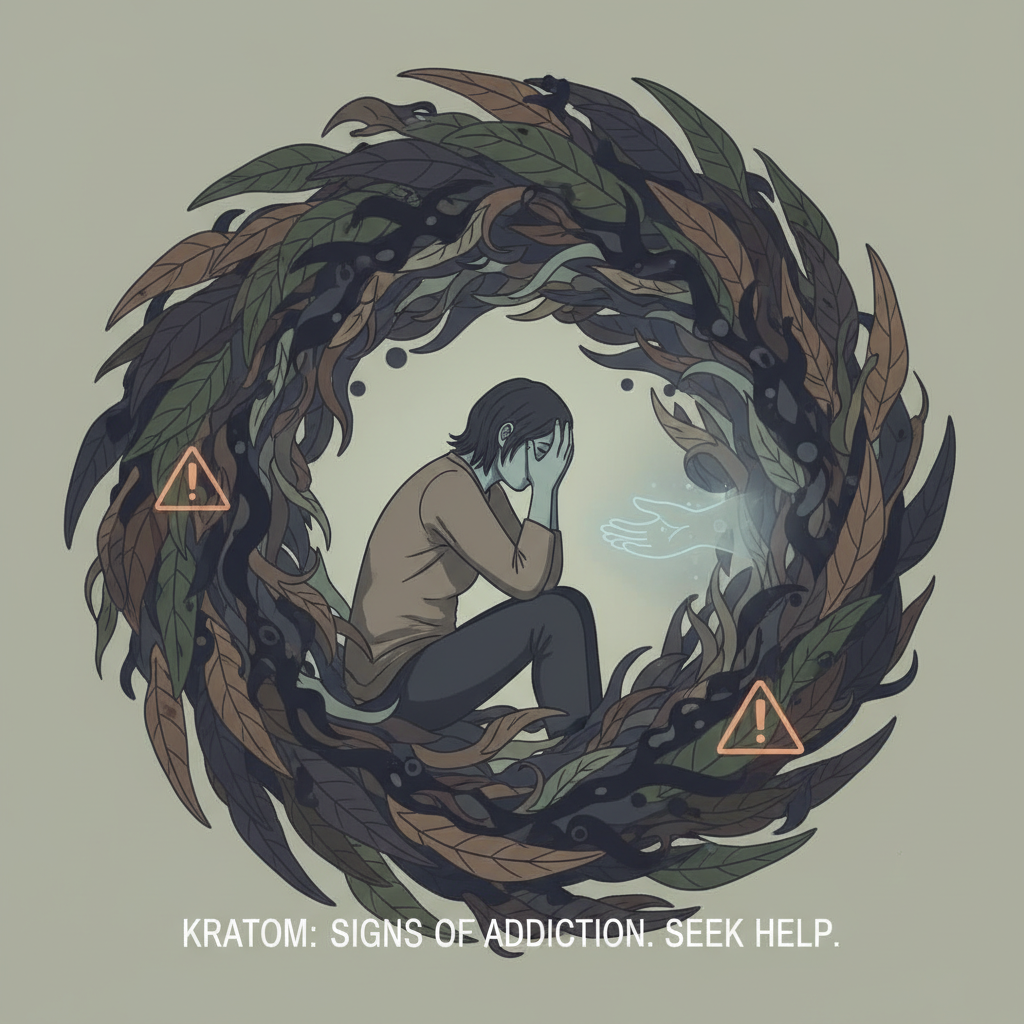
Kratom is often marketed as a “natural” or “safer” alternative to opioids or other drugs. Yet the real-world picture is more complicated. Research in 2025 suggested that about 25.5% of roughly 2 million annual kratom users in the U.S. met criteria for a substance use disorder, and more than half of regular users developed dependence, with relapse rates around 78% to 83% within three months of quitting [1]. When you look closely at the signs of kratom addiction, it becomes clear that this substance can be just as risky and disruptive as more widely recognized drugs.
If you are using kratom yourself, or worried about someone you care about, recognizing warning signs early can make a critical difference. Understanding what kratom addiction looks like, how withdrawal shows up, and when to seek help can help you protect your health and your future.
What kratom is and why addiction risk is often underestimated
Kratom is a plant-based substance made from the leaves of Mitragyna speciosa, a tree native to Southeast Asia. At lower doses, it can act like a stimulant. At higher doses, it behaves more like an opioid, affecting the brain’s reward and pain pathways. Some people first use kratom to self-manage pain, anxiety, or opioid withdrawal. Others use it recreationally for mood enhancement or energy.
Because kratom is sold in smoke shops, gas stations, and online, you may view it as a supplement instead of a drug with real addiction potential. Marketing language may reinforce that belief. However, clinical reports show that kratom use can lead to:
- Tolerance, meaning you need more to get the same effect
- Dependence, meaning your body adapts and you have withdrawal when you stop
- Addiction, meaning you keep using despite harm and intense cravings
Mayo Clinic notes that some people who start kratom to ease opioid withdrawal later require medications such as buprenorphine or buprenorphine-naloxone, the same treatments used for opioid addiction, because their kratom use itself has become compulsive and difficult to stop [2].
Recognizing patterns of compulsive substance use is not always easy when the drug is legal or widely accessible. If you want to understand your risk more broadly, it may also help to review how kratom signs compare to other substances, such as the signs of opioid addiction, signs of painkiller addiction, or signs of prescription pill addiction.
Core behavioral signs of kratom addiction
Behavioral changes are often the first warning signs of kratom addiction that you, or people around you, can notice. These patterns overlap with other behavioral signs of addiction, but have some details that may be specific to kratom.
Escalating use and loss of control
One of the clearest signs of kratom addiction is an escalating pattern of use. Over time, you may:
- Take kratom more often than you planned
- Increase your dose to chase the original effects
- Switch to more concentrated products or multiple strains
This pattern matches broader tolerance signs in drug misuse and escalating substance use indicators. You may repeatedly try to cut back or quit, yet find yourself using again after a short break. The high relapse rate reported in research, up to 83% within three months, suggests that this difficulty is very common among dependent kratom users [1].
Compulsive routines around kratom
Compulsion shows up in the way your day starts to revolve around obtaining and using kratom. You might:
- Structure your schedule around doses to avoid feeling sick
- Carry kratom everywhere “just in case”
- Spend more time researching strains, vendors, and dosing “hacks” than you would like to admit
- Feel uneasy or panicked if you cannot access your usual product
Over time, these patterns can mirror other dangerous substance use patterns, even if the substance is legal.
Neglecting responsibilities and activities
Kratom addiction can quietly erode functioning in work, school, or family life. You may notice that you:
- Miss deadlines or show up late because you feel unwell or preoccupied with dosing
- Withdraw from hobbies, social activities, or exercise that used to matter to you
- Cancel plans more often due to “not feeling right” without kratom
- Spend money on kratom that you need for bills or essentials
When kratom begins to affect multiple areas of life, it signals a shift from casual use to a pattern that fits the signs someone needs addiction treatment.
Hiding or minimizing use
Because kratom is still widely misunderstood, you may feel ashamed or uncertain about how others will react to your use. This can lead to secrecy, such as:
- Downplaying how much you use, even to yourself
- Hiding bottles, capsules, or powders
- Becoming defensive or irritated when someone expresses concern
- Switching vendors or payment methods to avoid detection
The DSM-5 criteria for substance use disorders rely heavily on honest disclosure, yet shame and stigma often make people minimize or hide their symptoms [1]. If you notice yourself lying about kratom, that alone is an important warning sign.
Physical signs of kratom dependence and addiction
Physical changes can reveal a lot about whether your body has become dependent on kratom. These signs often overlap with broader physical signs of drug dependency.
Tolerance and needing more to feel “normal”
With regular use, your body adapts to kratom. Over time you may:
- Need higher doses to get the same relief or euphoria
- Feel “off,” irritable, or foggy when your dose wears off
- Use kratom not to feel high, but just to feel like yourself
This shift, using primarily to avoid discomfort rather than to feel good, is a strong indicator that dependence has developed.
Acute physical side effects
Even before withdrawal, regular use can trigger physical symptoms such as:
- Nausea, vomiting, or stomach upset
- Constipation
- Sweating or hot and cold flashes
- Changes in appetite or weight
- Tremors or muscle twitches
Mayo Clinic also notes reports of high blood pressure, confusion, and seizures in some kratom users [2]. These signs may not appear in every user, but they underline that kratom is not a harmless herbal tea.
Kratom withdrawal symptoms
Withdrawal is one of the clearest physical signs of kratom addiction. According to both RehabNet and Atlanta Detox Center, kratom withdrawal often resembles a milder version of opioid withdrawal and typically follows a pattern [3]:
- 6 to 12 hours after last dose: irritability, anxiety, muscle aches, restlessness, and a strong urge to use kratom
- 1 to 3 days (acute stage): peak withdrawal with nausea, vomiting, diarrhea, insomnia, sweating, intense muscle pains, and severe cravings
- 4 to 7 days (subacute stage): physical symptoms begin to ease, but anxiety, depression, and mood swings may continue
- 1 to 2 weeks (late withdrawal): most physical discomfort fades, yet you may still feel emotionally unstable with occasional cravings
- Weeks to months (PAWS): for some, Post-Acute Withdrawal Syndrome (PAWS) includes persistent mood changes, stress sensitivity, sleep disruption, and intermittent cravings
Because kratom withdrawal can be intense and, in some cases, medically risky, both RehabNet and Atlanta Detox Center recommend medically supervised detox when dependence is significant [3]. If you have experienced similar withdrawal patterns from other substances, such as opioids, it can help to compare your experience with the signs of heroin dependence or signs of fentanyl use.
If you feel physically ill, anxious, or unstable every time you try to cut down, and using kratom is the only thing that makes the symptoms stop, that is not just “discomfort.” It is a key symptom of dependence and a serious sign that you deserve medical support.
Psychological and emotional signs of kratom addiction
Kratom affects your brain chemistry, not just your body. Over time, this can create a pattern of psychological dependence that looks similar to other emotional signs of substance use disorder.
Cravings and mental preoccupation
Cravings are more than “wanting” something. With kratom, you may:
- Think about your next dose throughout the day
- Find it difficult to focus on work or conversations when you are due to dose
- Feel a sense of panic or desperation if your supply is low
- Experience intrusive thoughts about kratom when you are trying to stop
These patterns match broader concerns about recognizing psychological dependence. When your mental energy is dominated by using, planning, or recovering from kratom, it is a key warning sign of addiction.
Mood swings, anxiety, and depression
Kratom can temporarily lift your mood or reduce anxiety, but repeated use can destabilize your emotional baseline. You may notice:
- Mood swings that feel “out of character” for you
- Irritability or anger between doses
- Worsening anxiety or depressive symptoms over time
- A sense of emotional numbness, where you feel disconnected from life without kratom
During withdrawal and PAWS, anxiety, depression, and mood instability can be especially intense, sometimes lingering long after physical symptoms fade [4]. If you are unsure whether your emotional changes are drug related, comparing them with broader hidden signs of addiction can provide additional context.
Cognitive changes and confusion
Mayo Clinic notes that kratom use has been associated with mental effects such as confusion [2]. You may find that you:
- Feel mentally foggy or “slowed down,” especially after larger doses
- Have difficulty remembering conversations or details
- Struggle to concentrate on reading, work, or complex tasks
When cognitive changes combine with emotional instability and cravings, they collectively point to a pattern that goes beyond casual use.
Severity markers that should not be ignored
Not every person who tries kratom will develop addiction. However, certain red flags indicate a higher level of risk and a stronger need for professional help. These mirror broader addiction red flags families should watch for and signs addiction is getting worse.
Continuing use despite clear harm
One of the most important DSM-5 addiction criteria is ongoing use despite clear negative consequences [1]. Ask yourself if you have:
- Continued to use kratom even after health scares, such as fainting, seizures, or severe blood pressure changes
- Ignored advice from doctors or loved ones to stop
- Kept using even though it is harming your relationship, job, or finances
If you have a history of other substances, such as the signs of benzo dependence, signs of stimulant addiction, or signs of marijuana dependence, kratom may be another way your brain seeks relief, even when you know it comes with a cost.
Polysubstance use and risk stacking
People who use kratom often also use other substances. You might combine kratom with alcohol, benzodiazepines, opioids, or stimulants to enhance effects or manage side effects. This kind of overlapping pattern fits with signs of polysubstance addiction and raises your risk of dangerous reactions.
Polysubstance use can:
- Increase the risk of overdose-like events
- Complicate withdrawal, since multiple drugs may be involved
- Mask or intensify symptoms like depression, anxiety, or confusion
If you recognize additional patterns similar to the signs of cocaine addiction, signs of methamphetamine addiction, or signs of stimulant addiction, your situation may be more complex than kratom alone.
Pregnancy and neonatal withdrawal
Mayo Clinic warns that kratom use during pregnancy can lead to newborns experiencing withdrawal after birth, requiring medical treatment [2]. If you are pregnant or planning pregnancy and using kratom, this is an urgent sign to seek medical help. Neonatal withdrawal shows how powerfully kratom can affect the body and underscores its addictive potential.
Why kratom’s “natural” label can be especially dangerous
One reason kratom addiction flies under the radar is the assumption that plant-based automatically means safe. Yet the Mayo Clinic notes that kratom products often have widely varying and unregulated concentrations of active ingredients, making it very hard to judge a safe dose [2].
This lack of regulation creates several risks:
- You may inadvertently escalate to stronger products without realizing it
- Two packages with the same label can produce very different effects
- Contaminants or adulterants may increase toxicity
- Your body may become dependent faster than you expect
When the dose and potency shift from batch to batch, your patterns of use can quickly move into the realm of high risk addiction behaviors, even if your intention was moderate or controlled use.
When to seek help for kratom use
It is not always simple to decide when use has crossed the line into addiction. You might hesitate because kratom feels less serious than “harder drugs,” or because you have used it to avoid going back to opioids or other substances. Yet the same principles that apply to other substances can guide you here.
You may want to reach out for professional support if any of the following are true:
- You experience withdrawal symptoms within hours of missing a dose
- You have tried and failed to cut down multiple times
- Your mood, sleep, or thinking clearly worsen without kratom
- Loved ones have expressed concern about your use
- You are using kratom alongside alcohol, benzos, opioids, or stimulants
- You recognize patterns similar to other patterns of compulsive substance use you have had in the past
Detox and treatment options for kratom addiction often resemble those for opioids. As Mayo Clinic notes, some people require medications like buprenorphine or buprenorphine-naloxone for cravings and withdrawal [2]. Medically supervised detox can also address the risk of high blood pressure, seizures, or other complications reported in kratom users.
From there, ongoing support, therapy, and sometimes medication are essential to address not only the physical dependence, but also the emotional and behavioral patterns that maintain addiction. If you see your experience reflected in the broader signs of alcohol-addiction or emotional signs of substance use disorder, you are not alone, and you do not have to handle this on your own.
Moving forward if you recognize the signs in yourself
If you see clear signs of kratom addiction in your life, you might feel a mix of fear, relief, and uncertainty about what to do next. Notice that recognition itself is a significant step. It means you are already interrupting the denial and minimization that can keep addiction hidden for years.
Consider these next steps:
- Talk to a medical or addiction professional. Be as honest as you can about how much and how often you use, any withdrawal symptoms, and all other substances you take. This helps them assess your risk and guide you toward appropriate care.
- Ask about medically supported detox. Given the severity of some kratom withdrawal symptoms and the risk of PAWS [4], supervised detox can make the process safer and more tolerable.
- Address co-occurring substances and mental health. If you also recognize the signs of stimulant addiction, signs of benzo dependence, or symptoms of depression and anxiety, make sure your team knows this. Comprehensive treatment is more effective than addressing each piece in isolation.
- Involve trusted people. Addiction thrives in secrecy. Sharing your plan to get help with someone you trust can create accountability and emotional support, which are especially important when cravings or PAWS symptoms rise.
Kratom addiction can be confusing because it lives in a gray area between supplement and drug, pain relief and dependency, harm reduction and new risk. Yet your experience, and your suffering, are real, regardless of labels. If your relationship with kratom is causing distress or harm, that is reason enough to seek help. You deserve support that takes your concerns seriously and offers real options for change.