
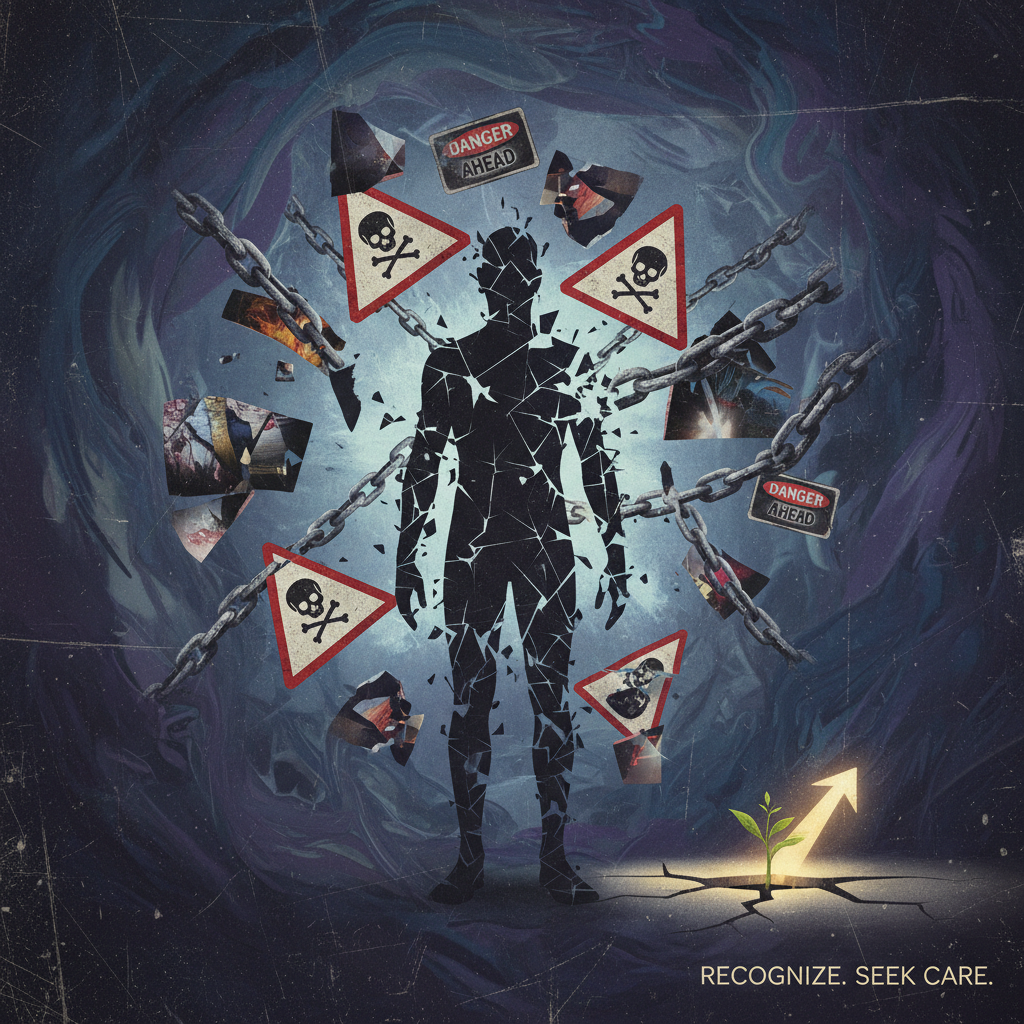
What “high risk addiction behaviors” really mean
When you hear the phrase “high risk addiction behaviors,” it can sound vague or clinical. In reality, it refers to specific patterns of use and choices that significantly raise your risk of developing an addiction, worsening an existing substance use disorder, or experiencing life‑threatening consequences.
Addiction is a chronic brain disorder that causes compulsive substance use or behaviors despite harmful outcomes, and it affects your physical and mental health, relationships, and work life [1]. High risk behaviors are the warning signs that this disease is taking hold or accelerating.
You might still be able to “hold things together” on the surface, yet notice your substance use creeping into more dangerous territory. Recognizing these behaviors early gives you the best chance to protect your health and get help before a crisis.
How addiction changes your brain and behavior
To understand high risk addiction behaviors, it helps to see what is happening in your brain and body.
Substances like alcohol, opioids, benzodiazepines, stimulants, nicotine, and drugs such as kratom and marijuana flood your brain’s reward center with dopamine. Over time, your brain adjusts to these surges and rewires itself to prioritize the substance over healthy activities [1].
Addiction is now recognized as a treatable, chronic medical disease that results from complex interactions among your brain circuits, genetics, environment, and life experiences [2]. This helps explain why:
- You may find yourself chasing a “high” you used to get easily
- You feel anxious, low, or physically ill when you try to cut back
- You make choices that do not match your values or priorities
As your brain changes, your behavior changes. High risk addiction behaviors are the outward signs of these internal shifts.
If you want a deeper dive into outward warning signs, you can explore behavioral signs of addiction, physical signs of drug dependency, and emotional signs of substance use disorder.
Core categories of high risk addiction behaviors
While each substance has its own profile, most high risk addiction behaviors fall into a few broad categories.
Escalation and loss of control
You move into high risk territory when you notice patterns like:
- Needing more of a substance to feel the same effect, a sign of rising tolerance that often appears in tolerance signs in drug misuse
- Taking larger doses than prescribed or using more frequently than you planned
- Having trouble sticking to limits you set for yourself, such as “only on weekends”
According to Mayo Clinic, increasing doses to get the same high and needing a drug just to feel normal are red flags that your brain has adapted and dependence is developing [3].
You can learn more about these patterns in escalating substance use indicators and patterns of compulsive substance use.
Compulsive use despite harm
Another cluster of high risk behaviors appears when you keep using even though you recognize the damage, for example:
- Continuing to drink heavily after health scares, accidents, or relationship ultimatums
- Using opioids, stimulants, or benzodiazepines despite overdoses or emergency room visits
- Missing work, school, or key family responsibilities because of your use
The American Society of Addiction Medicine describes addiction as ongoing, compulsive use despite harmful consequences [2]. When you notice that you are using “even though you know better,” this is a serious sign.
Risky contexts and methods of use
High risk addiction behaviors often involve the way and context in which you use, such as:
- Combining multiple substances, like alcohol with benzodiazepines or opioids, a pattern that can quickly turn into signs of polysubstance addiction
- Using alone where no one can help if you overdose
- Injecting drugs or using unknown synthetic substances, including “research chemicals,” bath salts, or unregulated pills
Synthetic drugs like substituted cathinones (bath salts) and synthetic cannabinoids (K2 or Spice) are highly addictive and can cause dangerous, unpredictable intoxication [3]. Any move toward these substances is a significant risk factor.
You can read more about patterns like these in dangerous substance use patterns.
Psychological dependence and cravings
Not all high risk addiction behaviors are visible from the outside. Some are primarily internal:
- Constantly thinking about when you will use next
- Feeling unable to cope with stress, sleep, or emotions without a substance
- Intense cravings that drive you to break promises to yourself
These are signs of psychological dependence, even if you still appear “functional.” If you relate, it may help to look at recognizing psychological dependence.
Substance‑specific high risk behaviors to watch
Each substance category carries its own set of high risk behaviors and consequences. The sections below are not exhaustive, but they outline some patterns that suggest your use is moving into dangerous territory.
Opioids: Prescription painkillers and heroin
Opioids include prescription medications like oxycodone and hydrocodone, as well as illicit drugs like heroin and fentanyl. They carry a particularly high risk because your brain can become dependent quickly, sometimes after short‑term medical use [3].
High risk opioid behaviors include:
- Taking more pills than prescribed or finishing prescriptions much earlier than expected
- Using opioids to “take the edge off” stress instead of for pain alone
- “Doctor shopping” or getting pills from multiple sources
- Switching from pills to heroin or fentanyl when prescriptions become harder to obtain
- Using opioids with alcohol or benzodiazepines, which significantly increases overdose risk
If you recognize these patterns, exploring signs of opioid addiction, signs of painkiller addiction, signs of prescription pill addiction, or signs of heroin dependence can help you assess where you stand. For specific risks tied to synthetic opioids, you can also review signs of fentanyl use.
Because individuals who have previously been addicted to opioids remain at high risk of rapid relapse and loss of control, even after periods of abstinence, any return to opioid use should be treated as a serious warning sign [3].
Alcohol: Normalized but dangerous patterns
Alcohol is legal and common, yet harmful alcohol use is linked to about 3 million deaths globally each year, and it accounts for a large percentage of deaths among people aged 20 to 39 [2].
High risk alcohol behaviors include:
- Regular binge drinking or blackouts
- Needing alcohol to start the day or to “steady your nerves”
- Drinking to the point of memory gaps, aggression, or dangerous decisions
- Hiding bottles, minimizing how much you drink, or feeling defensive when asked about it
Because alcohol problems can be easy to dismiss as “just partying” or “stress relief,” it is important to watch for hidden signs of addiction and addiction red flags families should watch for, especially if loved ones are expressing concern.
Benzodiazepines: Anti‑anxiety and sleep medications
Benzodiazepines such as Xanax, Ativan, or Valium can be helpful when prescribed and monitored, but they are highly habit forming. Combining them with alcohol or opioids creates a high risk of respiratory depression and overdose.
Concerning benzodiazepine behaviors include:
- Increasing your dose on your own or taking doses closer together
- Using benzos to “come down” from stimulants or to blunt emotional distress
- Feeling unable to sleep, function, or leave the house without them
- Experiencing withdrawal symptoms like anxiety spikes, tremors, or insomnia when you miss a dose
You can look more closely at these patterns in signs of benzo dependence. Since benzo withdrawal can be medically risky, it is important not to stop suddenly without medical guidance.
Stimulants: Cocaine, meth, and ADHD medications
Stimulants increase alertness and energy but also strain your heart and nervous system. They can be prescription medications for ADHD, or illicit stimulants like cocaine and methamphetamine.
High risk stimulant behaviors include:
- Using stimulants to stay awake, work longer hours, or party for extended periods
- Taking more pills than prescribed or crushing and snorting them
- Binging for days without adequate sleep or food
- Experiencing paranoia, agitation, or hallucinations
Methamphetamine and cocaine carry particularly serious risks for cardiovascular and mental health. If your use is moving in this direction, it may help to review signs of stimulant addiction, signs of cocaine addiction, or signs of methamphetamine addiction.
Synthetic stimulants such as bath salts can be even more unpredictable and dangerous, leading to extreme agitation and medical emergencies [3].
Marijuana and kratom: Misunderstood risks
Because marijuana and kratom are sometimes marketed as “natural” or “safer” alternatives, it can be easy to overlook high risk addiction behaviors with these substances.
For marijuana, concerning patterns include:
- Needing to use daily or multiple times a day to feel relaxed, creative, or able to sleep
- Using despite anxiety, paranoia, or memory problems
- Struggling at work, school, or in relationships because you are frequently intoxicated or unmotivated
If this sounds familiar, signs of marijuana dependence can help you assess how your use is affecting you.
Kratom, an herbal substance that can have both stimulant and opioid‑like effects, also carries real addiction and withdrawal risks. High risk kratom behaviors include escalating doses, using throughout the day to avoid withdrawal, and experiencing mood swings or physical symptoms when you try to cut back. You can learn more in signs of kratom addiction.
Polysubstance use: Multiplying the dangers
Using multiple substances together or in close sequence is one of the clearest high risk addiction patterns. For example:
- Mixing alcohol with opioids or benzodiazepines
- Using stimulants to stay awake, then sedatives to sleep
- Combining several party drugs in a single night
Polysubstance use can overwhelm your body’s ability to cope and makes overdoses more likely. If you see yourself in these patterns, signs of polysubstance addiction can provide more detailed guidance.
The connection between addiction behaviors and mental health
High risk addiction behaviors rarely exist in isolation. Almost half of people with a serious psychiatric illness also have a substance use disorder [4].
Common mental health factors that drive risky substance use include:
- Depression and anxiety
- Post‑traumatic stress disorder (PTSD)
- Attention‑deficit/hyperactivity disorder (ADHD)
- Past or ongoing trauma, discrimination, or chronic stress
Many people begin using substances to self‑medicate symptoms such as insomnia, intrusive memories, social anxiety, or low mood. The National Institute on Drug Abuse notes that self‑medication is a frequent starting point for high risk addiction behaviors, such as the increased alcohol use seen during the COVID‑19 pandemic in response to stress and isolation [5].
One powerful example: a woman named Natalie struggled with methamphetamine use disorder for 9 years. Her recovery only took hold after she was correctly diagnosed and treated for ADHD, which had been driving her substance use and relapse [5].
Social factors such as poverty, racism, and early childhood trauma also increase your risk by adding chronic stress and reducing access to care [5].
If you are seeing both mental health symptoms and substance use issues, seeking integrated care that treats both at the same time is crucial, even though only a small percentage of people currently receive this type of coordinated treatment [4].
Severity markers: When high risk behaviors signal urgent danger
Some warning signs indicate that your situation may be immediately dangerous and warrants urgent medical or crisis support. These include:
- Overdose events, even if you survived
- Repeated blackouts or episodes of lost time
- Severe withdrawal symptoms, such as seizures, hallucinations, extreme agitation, or chest pain
- Suicidal thoughts, self‑harm, or expressing that you “do not care” if you live or die
- Using in extremely unsafe situations, like while driving or while caring for children
Without treatment, addiction can lead to serious health problems, legal issues, financial collapse, and multigenerational harm to your family [1]. If you are unsure whether your situation is urgent, it is safer to treat these signs as serious and reach out for help.
If you or someone close to you is in immediate danger of self‑harm or overdose, contacting emergency services or the 988 Suicide & Crisis Lifeline can be lifesaving. The 988 Lifeline, administered by SAMHSA, provides a nationwide network of crisis centers for people experiencing mental health or substance use emergencies [6].
How to assess whether your behaviors are getting worse
When you are in the middle of it, it can be hard to see whether your substance use is actually getting more dangerous. You may find it helpful to:
- Compare your current patterns to how you were using six or twelve months ago
- Ask trusted friends or family how they see your behavior changing
- Notice any increase in secrecy, lying, or hiding related to your use
- Look at concrete consequences such as missed work, health scares, or legal problems
Resources like signs addiction is getting worse, hidden signs of addiction, and signs someone needs addiction treatment can help you take an honest inventory.
It can also be helpful to explore specific sections such as behavioral signs of addiction and physical signs of drug dependency to spot changes that you might otherwise minimize.
If you notice that your use is increasing, that you feel less able to control it, or that it is starting to cost you your health, relationships, or safety, those are clear signs that your behaviors are shifting into high risk territory.
Why early treatment for high risk behaviors matters
High risk addiction behaviors are not a character flaw. They are signals that your brain and body are being pulled into a chronic disease process.
Addressing these behaviors early can:
- Prevent overdose or life‑altering health complications
- Reduce the chance that you will develop severe, long‑term addiction
- Protect relationships, work, and finances before damage becomes harder to repair
- Make treatment simpler and more effective overall
In the United States, agencies like SAMHSA are working to expand access to treatment and crisis support. SAMHSA leads national efforts to prevent addiction and improve outcomes for people at high risk, including funding mental health and substance use services and maintaining crisis supports like the 988 Lifeline [6].
If you are not sure where to turn, SAMHSA’s National Helpline offers free, confidential treatment referrals and information 24 hours a day, 365 days a year. The helpline can connect you with local treatment programs, including options for people without insurance or with limited financial resources [7].
Taking your next step
If you see yourself in any of these high risk addiction behaviors, you are not alone, and you are not beyond help. Addiction and mental health conditions are common, complex, and treatable, especially when you take action early.
You can begin by:
- Having an honest conversation with your primary care physician or a mental health professional
- Reaching out to a trusted friend or family member and sharing what you are experiencing
- Calling a confidential helpline to explore treatment options in your area
As you reflect, you may find it helpful to review resources targeted to your situation, such as signs of prescription pill addiction, signs of stimulant addiction, or signs of marijuana dependence, depending on what you are using.
High risk addiction behaviors are signals, not verdicts. By paying attention to these signs and reaching out for support, you give yourself the best possible chance to change course and protect your health, your relationships, and your future.
References
- (Cleveland Clinic)
- (MDPI)
- (Mayo Clinic)
- (Columbia Psychiatry)
- (NIDA)
- (SAMHSA)
- (SAMHSA)