
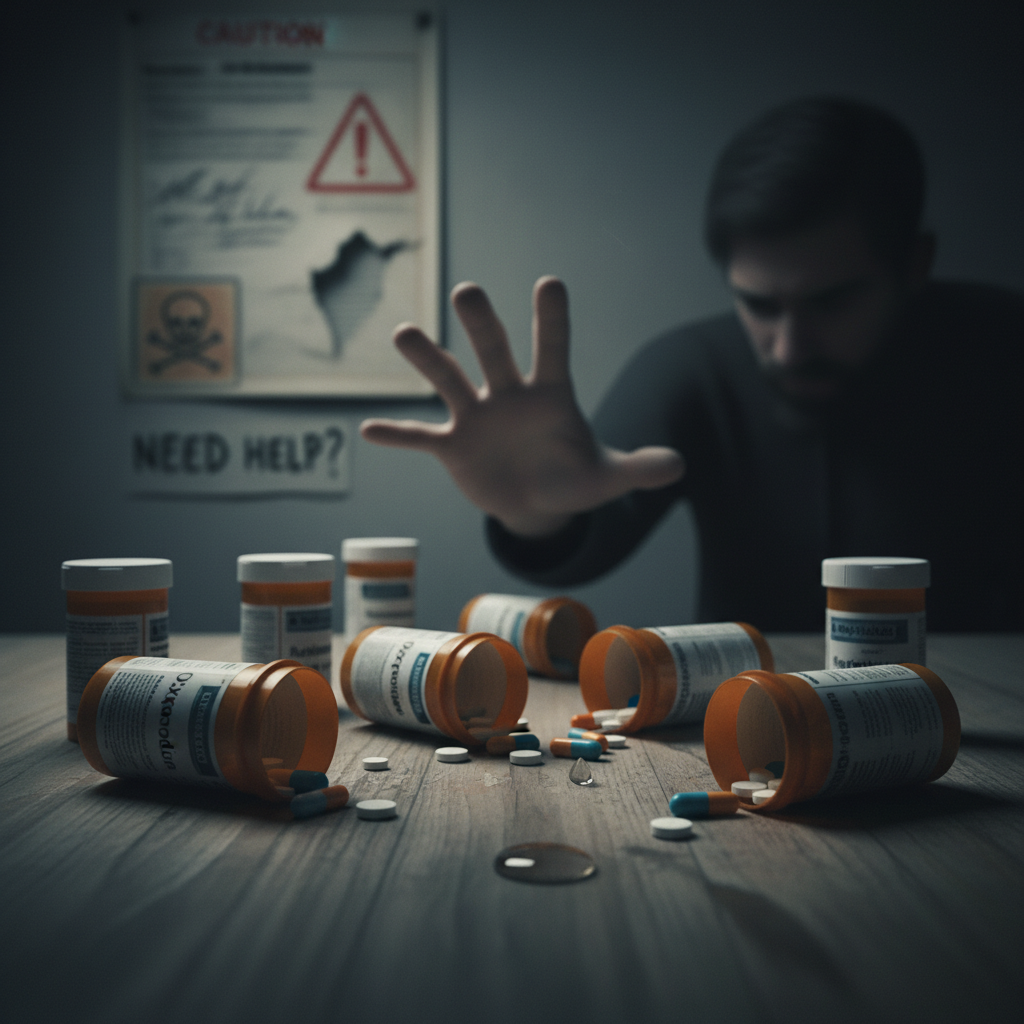
Why prescription pill addiction is easy to miss
You might expect addiction to look dramatic and obvious. With prescription medications, the warning signs can be much quieter at first. Because these drugs often come from a doctor and are taken from a pharmacy bottle, it can feel like they are automatically safe.
Prescription drug abuse, sometimes called prescription drug misuse, happens when you use medications in ways your prescriber did not intend. This can range from taking a friend’s painkiller to snorting or injecting pills to get high, and it can quickly become ongoing and compulsive even when you start seeing negative consequences [1].
Understanding the early signs of prescription pill addiction gives you a chance to make changes, ask questions, or reach out for help before the problem gets worse. Early identification and intervention can sometimes prevent a full addiction from developing [1].
What counts as prescription pill addiction
Prescription medications affect your brain’s reward center, which is why both physical dependence and addiction can develop, even when you start by taking a medication as prescribed [1].
You may be dealing with prescription pill addiction when:
- You use a prescription in larger amounts or longer than intended.
- You use pills prescribed to someone else.
- You take pills in different ways, such as crushing, snorting, or injecting.
- You keep using despite harm to your health, relationships, work, or finances.
- You feel unable to cut back, even if you strongly want to.
Addiction is not a character flaw or a lack of willpower. It is a medical condition that changes how your brain responds to stress, reward, and self-control. That is why outside help is often necessary, and why recognizing the signs of prescription pill addiction is so important.
Common types of misused prescription pills
Many classes of prescription medications can become addictive, especially when you increase the dose, take them more often, or use them for reasons other than treatment.
The most commonly misused prescription drugs with mind altering properties include opioid painkillers, anti anxiety medications, sedatives, and stimulants [1].
Opioid painkillers
Opioids such as oxycodone, hydrocodone, fentanyl, and morphine are intended for moderate to severe pain. They also carry a particularly high risk of addiction and overdose. Prescription opioid painkillers have a higher chance of causing addiction quickly compared with many other medications, and are a major driver of the opioid epidemic in the United States [2]. To explore this further, you can review the specific signs of painkiller addiction and signs of opioid addiction.
Anti anxiety medications and sedatives
Central nervous system depressants, such as benzodiazepines and certain sleep medications, can become addictive when used to escape stress or uncomfortable emotions. Misuse often starts as a way to relax or sleep, then gradually becomes a coping tool you rely on daily. If this sounds familiar, it may help to look at detailed signs of benzo dependence.
Prescription stimulants
Stimulants prescribed for ADHD or certain sleep disorders can be misused for energy, focus, or weight loss. What might begin as “extra help” during exams or long workdays can shift toward compulsive use and strong cravings. You can learn more through the specific signs of stimulant addiction.
Other substances to be aware of
Some people combine prescription pills with other substances such as alcohol, marijuana, cocaine, methamphetamine, or kratom. This is called polysubstance use and it greatly increases medical risks. If you have concerns about broader patterns, you may want to read about signs of polysubstance addiction, signs of cocaine addiction, signs of methamphetamine addiction, signs of marijuana dependence, or signs of kratom addiction.
Behavioral signs of prescription pill addiction
Behavior changes are often some of the earliest and clearest signs of prescription pill addiction. They can be easy to explain away at first, but patterns are what matter. You can also explore related behavioral signs of addiction for a broader view.
Changes in how you use the medication
You may notice yourself:
- Taking larger doses than prescribed or using the medication more often.
- Continuing the medication long after the original medical issue has improved.
- Getting pills from multiple doctors or pharmacies to avoid detection.
- Saying prescriptions were lost or stolen in order to get extra refills.
- Taking someone else’s medications because they “work better” or are stronger.
These behaviors reflect growing tolerance and a drive to maintain a certain effect. Tolerance, the need for higher doses for the same result, is one of the classic tolerance signs in drug misuse.
Shifts in priorities and routines
As prescription pill use becomes more central in your life, you might:
- Spend a lot of time thinking about how to get, use, or recover from pills.
- Miss work, school, or family commitments due to pill use or aftereffects.
- Pull back from hobbies, activities, or relationships that used to matter to you.
- Break personal rules you once held firmly, such as “I only take what my doctor says.”
These are examples of patterns of compulsive substance use. When your schedule quietly starts to revolve around medication, it is a significant warning sign.
Secretive or high risk behaviors
You may catch yourself:
- Hiding pill bottles, refills, or how many pills you have left.
- Lying to loved ones or health professionals about your use.
- Taking pills to “pre game” before social events or to manage hangovers.
- Mixing medication with alcohol or other drugs, even when warned not to.
These are examples of high risk addiction behaviors and dangerous substance use patterns. Secrecy, in particular, is often one of the strongest red flags.
If you are trying to watch for someone else, you can also review addiction red flags families should watch for and hidden signs of addiction.
Psychological and emotional warning signs
Prescription pill addiction almost always involves a psychological component. Many people describe a mental or emotional dependence that feels just as powerful as physical cravings. Understanding these emotional signs of substance use disorder can help you see the full picture.
Cravings and mental preoccupation
You may notice:
- Strong urges to take a pill, even when you do not physically need it.
- Feeling distracted until you know you have your next dose secured.
- Difficulty imagining handling stress, sleep, or social situations without pills.
- Frequently checking how many pills are left and planning around refill dates.
These are typical signs of psychological dependence. You can learn more in depth by reading about recognizing psychological dependence.
Using pills to manage emotions
Another major sign is using medication as your primary way to handle emotional states. This might include:
- Taking extra doses when you feel stressed, anxious, or overwhelmed.
- Using pills when you feel bored, lonely, or sad to “numb out” or escape.
- Reaching for medication automatically when anything difficult happens.
Addiction to central nervous system depressants, such as benzodiazepines, may start with using them to relax or escape stress related thoughts. Over time this pattern becomes drug misuse in its own right [2].
Mood and personality changes
You might notice:
- Increased irritability, agitation, or restlessness between doses.
- Mood swings that feel larger or more unpredictable than usual.
- Feeling emotionally flat or disconnected when not using pills.
- Growing anxiety or paranoia about running out or being confronted.
These emotional shifts can creep up slowly. If you or people close to you notice your personality changing around your prescription use, that is a sign worth taking seriously.
Physical signs your body is becoming dependent
Physical symptoms are an important part of recognizing addiction, but they are not the only factor. Many people minimize these signs or assume they are unrelated. It can help to look at the broader list of physical signs of drug dependency.
Tolerance and needing more to feel the same
Over time, your body adapts to the medication. You may notice:
- The original dose barely seems to help anymore.
- You need higher or more frequent doses to get pain relief, relaxation, or focus.
- You start chasing the “first time” feeling, but can never quite reach it.
Physical dependence and addiction can develop from commonly abused prescription drugs because they activate the brain’s reward center [1]. Tolerance is one of the strongest indicators that your brain and body are changing in response to the drug.
Withdrawal when you cut back or stop
One of the clearest signs of prescription pill addiction is feeling physically or mentally unwell when you miss a dose, lower your dose, or try to stop. With prescription opioids, for example, signs and symptoms of addiction can include needing larger doses, intense cravings, and physical illness when not using the drug. It then becomes increasingly difficult to stop [2].
Depending on the pill type, withdrawal may show up as:
- Flu like symptoms, sweating, goosebumps, muscle aches, stomach upset.
- Tremors, restlessness, or feeling unable to sit still.
- Insomnia, nightmares, or very vivid dreams.
- Anxiety, panic, or waves of low mood.
These symptoms can begin even after using a prescription for a relatively short time, especially at higher doses.
General physical health changes
You may also notice:
- Unexplained weight loss or gain.
- Changes in sleep patterns, either sleeping far more or far less.
- Poor hygiene or less attention to grooming and self care.
- Slower reaction times or coordination problems if you are overly sedated.
- Periods of extreme alertness or “wired” energy if you are misusing stimulants.
Medication, especially in higher doses or combined with other substances, can significantly strain your heart, breathing, liver, and other organs. Serious medical problems or even death can occur when pills are taken in high doses or mixed with other prescriptions, over the counter medicines, alcohol, or illicit drugs [1].
Substance specific warning signs to watch
Each group of medications has its own typical pattern of problems. Being familiar with these can make it easier to notice when something is shifting from appropriate use into addiction.
Even if you began by taking a medication exactly as prescribed, addiction can still develop. This is a risk of the drugs themselves, not a personal failure.
Opioid painkillers
Common warning signs include:
- Taking pills “just in case” before pain actually flares up.
- Using opioids for emotional relief rather than physical pain.
- Strong cravings and physical sickness when you miss a dose.
- Doctor shopping or visiting emergency rooms to get extra prescriptions.
To explore this further, you can read more about signs of fentanyl use, signs of heroin dependence, and signs of opioid addiction, which often overlap with prescription opioid issues.
Benzodiazepines and other sedatives
With benzodiazepines and related medications, you might notice:
- Taking pills earlier than scheduled because you feel tense or uneasy.
- Needing higher doses to get the same calming or sleep effect.
- Blackouts or memory gaps around times you use the medication.
- Panic or intense discomfort if you try to reduce your dose.
Since withdrawal from these medications can be medically risky, it is very important not to stop suddenly on your own. The information on signs of benzo dependence can help you better understand this pattern.
Prescription stimulants
If you are misusing stimulants, signs can include:
- Taking higher doses than prescribed or using medication not prescribed to you.
- Using pills to push through long workdays or all nighters.
- Feeling unable to function at school or work without the drug.
- Intense fatigue and low mood when the medication wears off.
You can compare your experience against the more detailed signs of stimulant addiction and escalating substance use indicators.
When prescription use overlaps with other substances
If you are combining prescription pills with alcohol, marijuana, kratom, or illicit drugs, your risk increases sharply. This pattern often reflects underlying dangerous substance use patterns and is a strong signal that a professional assessment would be helpful.
Severity markers that mean you need help now
Not everyone who misuses a prescription develops full addiction, but some signs indicate that the situation is becoming more serious. Recognizing when addiction is progressing can help you act before a crisis. For a broader checklist, you can look at signs addiction is getting worse and signs someone needs addiction treatment.
Key severity markers include:
-
Loss of control
You keep using more than you planned or for longer than you meant to, repeatedly, even after promising yourself you would cut back. -
Major life consequences
Pill use has led to job problems, academic issues, financial strain, accidents, or major relationship conflicts, and you continue using anyway. -
Risky use despite knowing the danger
You keep driving, working, or caring for children while sedated, or you mix pills with alcohol or other drugs even after health warnings. -
Increasing time and focus on pills
A large part of your day is now dedicated to getting, using, or recovering from medication, and other parts of life are shrinking. -
Strong withdrawal and repeated failed attempts to quit
You feel physically or emotionally sick if you try to stop, and efforts to quit on your own have repeatedly not worked.
If several of these apply to you, it is very likely that addiction has taken hold, and professional support can make a critical difference.
When to talk to someone and what to expect
You do not need to be certain you are addicted to ask for help. In fact, early questions and conversations are often the best time to reach out.
You might start by:
- Talking honestly with your prescribing doctor about how you are using the medication.
- Sharing your concerns with a trusted friend or family member.
- Contacting a counselor, therapist, or addiction specialist for an assessment.
An assessment typically includes a conversation about your medical history, how you use the medication, what you have tried so far, and how pill use is affecting your life. The goal is not to judge you, but to understand what is happening so you can decide on next steps together.
Depending on your situation, options might include:
- A gradual, medically supervised taper if stopping suddenly would be risky.
- Counseling to address anxiety, pain, or other issues that led to medication use.
- Support groups, peer support, or structured outpatient care.
- In some cases, inpatient or residential treatment, especially if you are also using other substances or have other medical or mental health concerns.
Early help can prevent more severe complications such as overdose, serious health problems, or accidents. Prescription drug abuse can lead to life threatening consequences, especially when combined with other medications, alcohol, or illegal drugs [1].
Taking your concerns seriously
If you see yourself in some of these signs of prescription pill addiction, you are not alone, and you are not beyond help. Addiction to prescription pills can begin even when you take medicines as directed, or when you receive them from others’ prescriptions, which shows how powerful these substances can be [2].
You do not need to wait for a rock bottom moment to act. Paying attention to early behavioral signs of addiction, physical signs of drug dependency, and emotional signs of substance use disorder gives you a chance to change direction now.
If you feel unsure whether what you are experiencing is addiction, that is a good reason to have a conversation with a professional. Simply asking the question is a sign that your own awareness is working, and that you are ready to protect your health and your life.