
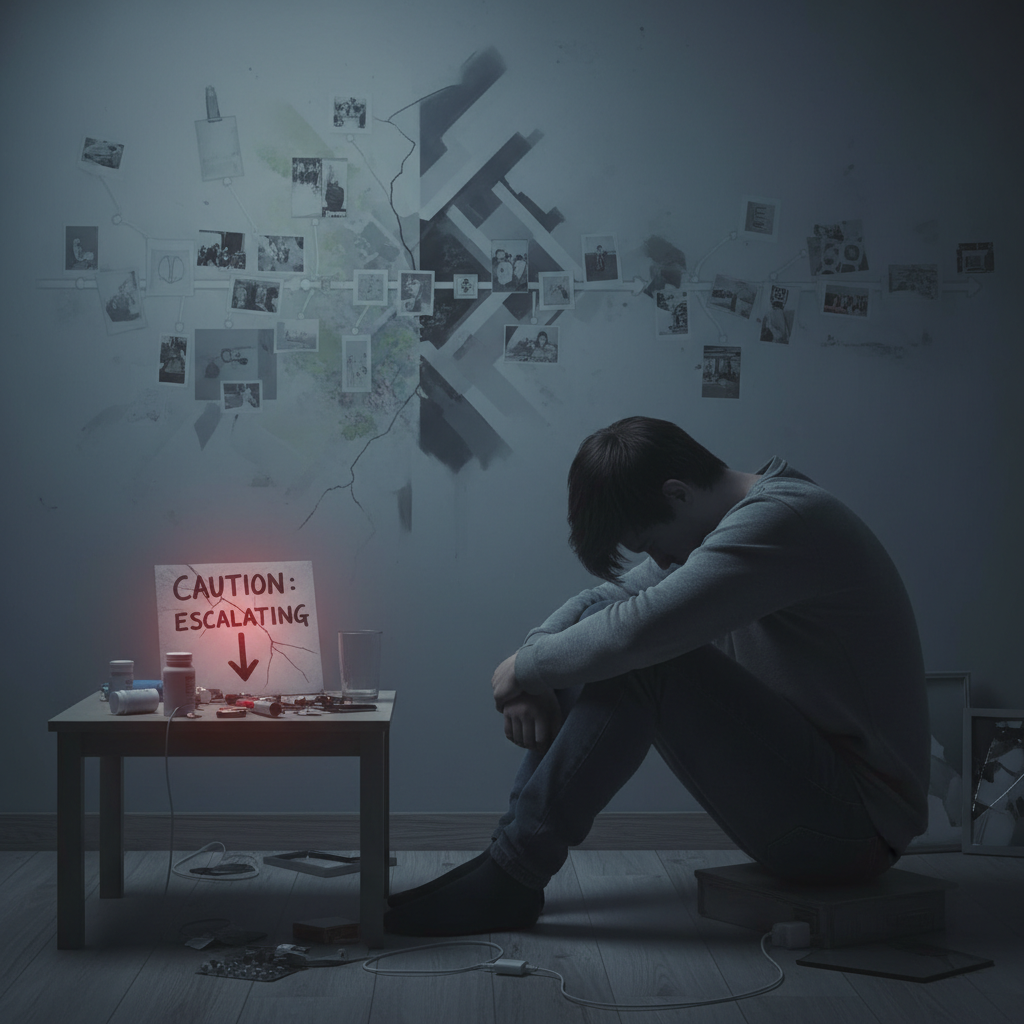
Why escalating substance use indicators matter
Escalating substance use indicators are the early warning signs that casual or experimental use is shifting into harmful, compulsive patterns. Catching these changes quickly gives you the best chance of interrupting the progression toward full substance use disorder, which is a chronic brain disease that affects judgment, impulse control, and decision making [1].
In the United States, about 17% of people 12 and older reported either drug misuse or heavy alcohol use in a single year, and 8% met criteria for a substance use disorder [2]. These numbers underline how common it is for use to escalate without being noticed. Your goal is not to diagnose yourself or someone else, but to recognize patterns that should prompt a serious conversation and often a professional evaluation.
You might notice these changes in your own behavior or see them in someone you care about. In both cases, awareness is a powerful tool. When you understand what escalating substance use looks like, you can respond faster, reduce risk, and seek help before a crisis occurs.
How substance use typically escalates
Escalation rarely happens overnight. Most people move through stages, and the specific pathway can vary by substance, stress level, and personal vulnerability. Understanding the common trajectory can help you spot when use is no longer staying in the “occasional” or “recreational” zone.
From experimentation to regular use
At first, use might feel infrequent and controlled. You drink heavily on weekends, take a stimulant pill to study, use marijuana to unwind, or rely on pain pills for an injury. Over time, you may notice:
- Using more often than you planned
- Extending use into new situations, like weekdays or at work
- Justifying use with “I deserve it” or “I am only doing this for a little while”
The shift from occasional to regular use is one of the earliest escalating substance use indicators, even if you still feel mostly “in control.”
Tolerance and needing more
As your brain adapts to the presence of a substance, you may need larger or more frequent doses to feel the same effect. This is known as tolerance and is a key marker that use is progressing [1]. You might catch yourself thinking:
- “Two drinks is nothing for me anymore.”
- “One pill does not do anything. I need two.”
- “I used to get high from just a little, now I hardly feel it.”
Persistent tolerance is a strong signal that your brain and body are changing in response to the substance. For more detail on this pattern, you can review specific tolerance signs in drug misuse.
Withdrawal and using to feel “normal”
As use escalates, you might notice that you do not feel well when you are not using. This can be physical, emotional, or both. You may:
- Wake up shaky, nauseated, or sweaty
- Feel anxious, restless, or unusually irritable
- Have trouble sleeping without using
- Use just to feel “okay” instead of to feel good
Needing the substance to avoid feeling sick or unstable is a critical escalation marker and often indicates physical dependence, especially with alcohol, opioids, and benzodiazepines.
Behavioral signs your use is getting worse
Behavioral changes are often the earliest and most visible escalating substance use indicators. You may recognize them in your daily routines, relationships, and responsibilities. Many of these overlap with general behavioral signs of addiction, but the focus here is on what shows things are actively getting worse.
Shifts in priorities and routines
One of the clearest warning signs is that substances start to take priority over other parts of your life. This can look like:
- Canceling plans or skipping activities you used to enjoy so you can use
- Organizing your day around when and how you will get your substance
- Letting work, school, or family responsibilities slide because of use or recovery time
- Showing up late, unprepared, or not at all due to hangovers, crashes, or being high
If you notice that your schedule, hobbies, or goals are consistently taking a back seat, your use is likely escalating.
Secrecy, hiding, and rule-breaking
As consequences build, you may start hiding the extent of your use. This secrecy is not just about shame, it also reflects growing dependence. You might:
- Lie about how much you are using or how often
- Use alone or in secret to avoid questions
- Keep stashes in multiple places
- Get defensive or angry if someone brings up concerns
- Break personal “rules” you set, like “only on weekends” or “never at work”
These patterns often overlap with hidden signs of addiction and with broader addiction red flags families should watch for.
Riskier situations and high-risk behaviors
Escalation is often visible in the kinds of risks you are willing to take. You may:
- Drive while impaired or ride with someone who is
- Use more than one substance together, such as alcohol with pills or stimulants with opioids
- Take unknown pills, powders, or doses
- Use substances in unsafe environments or with people you do not know well
These are examples of dangerous substance use patterns and high risk addiction behaviors. When you notice risk-taking increasing, it is a strong signal that use is moving into a more dangerous stage.
Emotional and psychological warning signs
Substance use affects mood, thinking, and how you relate to stress. Because these changes can easily be mistaken for “just anxiety” or “a rough patch,” they are often missed until use is severe.
Mood swings and emotional volatility
Sudden or extreme changes in mood can signal escalating use, especially when they do not match what is going on in your life. You might notice:
- Feeling fine one moment, then unusually irritable or angry
- Mild stress leading to intense frustration or outbursts
- Periods of agitation or restlessness that improve after using
- Deep sadness or numbness during times when you are not using
For many people, these emotional changes are some of the earliest emotional signs of substance use disorder.
Obsession, cravings, and mental preoccupation
As use progresses, thoughts about the substance take up more mental space. This mental preoccupation is a core component of recognizing psychological dependence. You may find that you:
- Think about using throughout the day, even when you are busy
- Have strong cravings triggered by people, places, or feelings
- Feel distracted or unable to focus until you know when you can use again
- Spend significant time planning how to get, use, and recover from substances
When thinking about the substance becomes a dominant part of your mental landscape, your risk of continued escalation is high.
Denial, minimization, and shifting blame
Another psychological sign that use is escalating is how you talk about it, both to yourself and others. You might:
- Downplay the amount or frequency of use
- Compare yourself to others to feel safer, such as “At least I am not as bad as them”
- Blame stress, other people, or circumstances for your use
- Change the subject or joke when someone raises concerns
This internal dialogue makes it easier to continue using despite clear consequences and is a key part of the progression from risky use to full substance use disorder [1].
Physical signs that point to escalation
Physical changes can be subtle or dramatic. While some overlap with general physical signs of drug dependency, the focus here is on patterns that indicate your body is becoming increasingly affected.
General physical red flags
Across many substances, you may notice:
- Significant weight loss or gain over a relatively short time
- Chronic fatigue, low energy, or feeling “worn down”
- Unexplained bruises, injuries, or accidents
- Changes in sleep patterns, including insomnia or oversleeping
- New or worsening headaches, stomach issues, or aches and pains
These can all be indicators that use is affecting your overall health and functioning.
Signs of tolerance and withdrawal in the body
As dependence develops, you may see a predictable pattern:
- Feeling shaky, sweaty, nauseated, or anxious after not using for a while
- Experiencing chills, muscle aches, or flu-like symptoms between doses
- Noticing your heart racing or feeling palpitations
- Using the substance to relieve those symptoms and feeling temporary relief
Over time, many people require increasing doses to avoid withdrawal, not just to get high, which is a major escalation marker [1].
Substance-specific escalation patterns
Each substance has its own risk profile, typical progression, and warning signs. Recognizing these helps you distinguish between occasional use and patterns that require prompt action.
Opioids and prescription painkillers
Opioids include prescription pain pills, heroin, and powerful synthetics like fentanyl. Non-medical use of prescription opioids has risen sharply and is a major driver of overdose deaths [2]. Opioids also carry a high addiction risk and can cause dependence quickly [1].
Escalating indicators can include:
- Taking pain medication more often or at higher doses than prescribed
- Visiting multiple doctors or “losing” prescriptions to obtain more pills
- Moving from pills to heroin or fentanyl when prescriptions are harder to get
- Experiencing intense flu-like withdrawal symptoms between doses
- Needing opioids just to function or get out of bed
If you are concerned about pain medications, you can explore signs of painkiller addiction, signs of prescription pill addiction, and more specific signs of opioid addiction. For illicit opioids, review signs of heroin dependence and signs of fentanyl use.
Benzodiazepines (benzos)
Benzodiazepines, such as Xanax, Valium, or Klonopin, are often prescribed for anxiety, insomnia, or panic disorders. They are effective short term but can cause physical dependence, especially with ongoing use.
Escalation signs include:
- Taking extra doses when you feel stressed or anxious
- Combining benzos with alcohol or opioids to intensify the effect
- Experiencing increased anxiety, insomnia, or agitation when you try to cut back
- Needing pills simply to feel calm or “normal”
Because benzodiazepine withdrawal can be medically dangerous, noticing early signs of benzo dependence is especially important.
Stimulants and ADHD medications
Stimulants include cocaine, methamphetamine, and prescription ADHD medications like Adderall or Ritalin. Methamphetamine in particular has one of the highest risks for rapid development of a severe substance use disorder and produces very strong dopamine surges in the brain [3].
As use escalates, you may:
- Increase your dose or use more frequently to maintain focus or energy
- Stay awake for long periods, then crash hard
- Become paranoid, extremely anxious, or suspicious
- Ignore food, sleep, and other basic needs
- Use stimulants to “balance out” alcohol, opioids, or other substances
For more focused insight, you can review signs of stimulant addiction, signs of methamphetamine addiction, and signs of cocaine addiction.
Alcohol
Alcohol is legal and socially accepted, yet it remains a major contributor to substance-related harm, with millions reporting binge drinking and many not meeting formal criteria for a disorder despite serious misuse [2]. Escalation can be easy to overlook because heavy drinking is often normalized.
Key indicators include:
- Needing more drinks than before to feel relaxed or buzzed
- Regularly drinking to the point of blackouts or memory gaps
- Using alcohol to cope with stress, anxiety, or sleep difficulties
- Drinking alone, drinking earlier in the day, or hiding alcohol
- Continuing to drink despite relationship problems, legal issues, or health concerns
When drinking begins to create consistent harm, your risk of progressing to an alcohol use disorder increases and professional support is recommended.
Marijuana
Marijuana is now the most frequently used illicit drug in the United States, and its use has increased alongside legalization in many states [2]. Although some see it as relatively harmless, dependence and significant impairment can still occur.
Escalating marijuana use may look like:
- Using daily or multiple times per day
- Needing stronger products or concentrates to feel the same effect
- Feeling irritable, anxious, or unable to sleep without using
- Losing interest in non-using activities or social groups
- Struggling at work or school due to lack of motivation, memory issues, or missed responsibilities
To explore these patterns further, see signs of marijuana dependence.
Kratom
Kratom is often marketed as a natural alternative for pain relief, energy, or mood improvement. Despite being plant-based, it can cause dependence, especially with regular or high-dose use. Kratom may act on some of the same brain receptors as opioids [1].
You might notice escalation if you:
- Increase your dose to get the same effect
- Take kratom several times a day and feel unwell when not using
- Experience nausea, constipation, or other side effects but keep using
- Rely on kratom to manage withdrawal from other substances
You can read more about specific signs of kratom addiction if you use kratom regularly.
Polysubstance use
Using more than one substance at a time, or switching between substances, significantly raises your risk for overdose and rapid development of a severe disorder [3]. Examples include:
- Mixing alcohol with benzodiazepines or opioids
- Using stimulants to stay awake while drinking heavily
- Taking multiple prescription medications in ways not directed
These signs of polysubstance addiction often indicate a higher level of risk and complexity, so early recognition and intervention are especially important.
When patterns show addiction is getting worse
Not every concerning pattern means full addiction, but certain combinations of indicators point clearly to worsening severity. These overlap with broader signs addiction is getting worse and patterns of compulsive substance use.
Watch for:
- Repeated failed attempts to cut down or quit
- Spending large amounts of time obtaining, using, or recovering from substances
- Continuing to use despite clear and repeated problems at work, school, or home
- Needing substances to face normal daily responsibilities
- Experiencing medical, legal, or financial problems directly tied to use
At this stage, substances are not just part of your life, they are directing it. These are strong signs someone needs addiction treatment, not just self-help or willpower.
Special considerations for teens and young adults
Substance use that begins in adolescence or young adulthood carries particular risk. During these years the brain is still developing, and early exposure increases the chance of later substance use disorders [3].
In teens, escalating indicators can be easy to confuse with typical moodiness or independence, but certain patterns stand out:
- Sudden drop in grades or interest in school
- New, secretive friend groups and unexplained absences
- Withdrawal from family, increasing secrecy, and changes in behavior
- Noticeable mood swings that seem extreme for the situation
- Physical changes such as red or heavy-lidded eyes, frequent nosebleeds, weight changes, or poor hygiene
These behavioral and physical signs, especially in combination, are important markers of possible substance use that requires attention [4]. Early, calm, and nonjudgmental conversations increase the chance that a teen will talk openly about what is going on and accept help when needed.
How to respond quickly and safely
Recognizing escalating substance use indicators is only the first step. How you respond can make a significant difference in what happens next.
Take your own concerns seriously
If you are worried enough to be reading about warning signs, that is meaningful data. You do not need to wait for a crisis or a formal diagnosis to act. You can:
- Track your use, including how often, how much, and in what situations
- Notice patterns between mood, stress, and use
- Be honest about broken “rules” or promises to yourself
These observations will be useful if you choose to talk with a health professional or counselor.
Reach out for evaluation and support
Substance use disorders are medical conditions, not moral failings. They respond best to professional assessment and evidence-based treatment [1]. Depending on your situation, you might consider:
- Talking with your primary care provider or a mental health professional
- Contacting an addiction specialist for a comprehensive evaluation
- Exploring outpatient counseling, support groups, or higher levels of care if needed
If you identify with many of the indicators described here, especially physical withdrawal or high-risk behaviors, seeking help sooner rather than later is especially important.
Know that change is possible
It can feel overwhelming to recognize how far substance use has progressed. At the same time, this awareness is a turning point. With appropriate support and treatment, many people stabilize their health, rebuild relationships, and reclaim parts of life they thought were lost.
If you see yourself or someone you love in these escalating substance use indicators, you are not alone. Step by step, you can move from concern to action, and from action to meaningful change.