
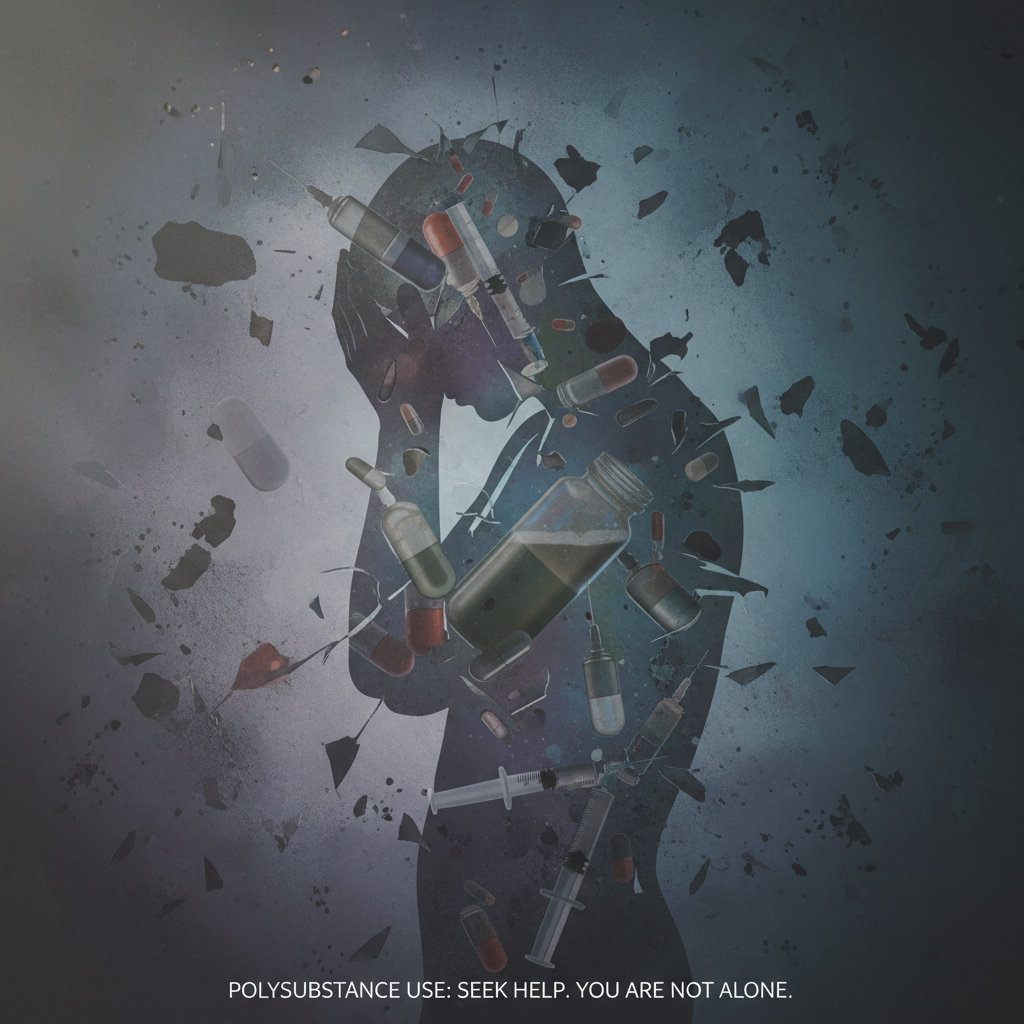
Understanding polysubstance addiction
When you look for signs of polysubstance addiction, you are really looking at a pattern of using more than one substance in a way that harms your health, relationships, or ability to function. Polysubstance use disorder means you meet criteria for more than one substance use disorder at the same time, for example alcohol use disorder combined with tobacco or opioid use disorder [1].
This type of addiction often develops gradually. You might start with one substance, then add alcohol to “take the edge off,” marijuana to relax, or stimulants to wake up after using depressants. Over time, the mix becomes your new normal, even as your life and health begin to revolve around getting and using multiple substances.
Recognizing signs of polysubstance addiction early is crucial, because mixing drugs has unpredictable, sometimes life‑threatening effects on your brain, heart, and breathing [2]. If you see yourself in several of the signs below, it is a strong signal to consider a professional evaluation.
If more than one drug has become part of your regular routine, even “only on weekends,” you are already in a higher risk category than someone using a single substance.
Why mixing substances is especially dangerous
Most substances affect your brain’s reward system by triggering a surge of dopamine, which reinforces continued use despite harm [1]. When you combine substances, those effects stack and overlap in ways that can be hard to predict.
Depressants like alcohol, benzodiazepines, and opioids slow your central nervous system. Stimulants like cocaine, methamphetamine, and prescription ADHD medications increase heart rate and blood pressure. Synthetic drugs like K2 or “bath salts” can cause sudden shifts in mood, perception, and heart function [3].
Mixing these categories can:
- Increase overdose risk, especially when you combine depressants
- Hide how intoxicated you are, so you keep using more
- Trigger severe withdrawal, because your brain is adjusting to several drugs at once
- Make diagnosis and treatment more complex
Polysubstance use is common with cannabis, alcohol, prescription pills, stimulants, synthetic cannabinoids (K2, Spice) and substituted cathinones, often sold as “bath salts” [3]. You might already recognize some of the behavioral signs of addiction for a single drug. With polysubstance addiction, those signs show up across several substances at the same time.
Sign 1: Regularly using more than one substance
One of the clearest signs of polysubstance addiction is a pattern of using multiple substances together or within the same day or week. It is not just “occasionally” drinking and rarely taking a pill. Instead, you might notice that:
- You regularly drink and use marijuana together
- You take benzodiazepines, like Xanax, with alcohol to increase relaxation
- You combine stimulants and alcohol to stay awake longer and “party harder”
- You use opioids, then add something else to manage side effects or come down
Polysubstance use disorder is defined as using more than one substance in a pattern that interferes with your health, functioning, or quality of life [2]. If more than one drug has become part of your coping system, this is a warning sign, even if you believe you are “still managing.”
Sign 2: Needing more and more to feel anything
Another core sign of polysubstance addiction is tolerance, the need to take larger amounts to get the same effect. For many people, this shows up as:
- Drinking more than you used to, then adding other substances
- Needing higher doses of prescription pills to feel calmer or focused
- Increasing the amount of marijuana, kratom, or opioids just to feel “normal”
Repeated use of multiple substances creates physical changes in your brain, which is why tolerance builds and cravings intensify [3]. If you notice tolerance signs in drug misuse across different drugs at once, that is a strong indicator that your use pattern is escalating.
Sign 3: Withdrawal symptoms from more than one drug
Withdrawal is a key marker of physical dependence. With polysubstance addiction, withdrawal can be more complicated because you may experience symptoms when any one of the substances wears off.
You might notice:
- Intense cravings for alcohol, opioids, or stimulants when you stop
- Anxiety, shaking, sweating, or nausea
- Insomnia, vivid nightmares, or restlessness
- Mood swings, irritability, or feeling “on edge” until you use again
Symptoms can vary depending on which substances you use and in what quantities [2]. If you feel unwell when you try to cut back from several drugs, or find yourself taking one substance to ease withdrawal from another, that is a significant sign of polysubstance addiction.
Sign 4: Using different drugs to balance each other out
Many people with polysubstance addiction use one drug to “fix” the effects of another. You may recognize this as:
- Taking stimulants after a night of drinking to wake up and function
- Using benzodiazepines to calm down after stimulant binges
- Taking opioids or kratom for pain or emotional numbing, then marijuana to relax
- Using alcohol to soften the edges of prescription stimulants or cocaine
This pattern can create a cycle of chasing balance that never quite arrives. Instead, your brain learns to expect multiple drugs for different times of day or emotional states. Over time, this can lead to patterns of compulsive substance use that feel impossible to break without help.
Sign 5: Major changes in mood, behavior, or personality
Polysubstance addiction rarely stays hidden in how you feel and act. You may see noticeable shifts in your mood and behavior, sometimes even within the same day, depending on what you have taken.
Common changes include:
- Going from energized and talkative to withdrawn and sedated
- Increased irritability, anger, or emotional outbursts
- Anxiety or paranoia, especially with stimulants or synthetic drugs
- A “flat” or numbed emotional state when you are not using
Because different substances affect your brain in different ways, combining them can cause rapid mood swings and unstable behavior. These can overlap with other emotional signs of substance use disorder, such as low motivation, hopelessness, or feeling disconnected from people and activities you care about.
Sign 6: Physical warning signs across multiple substances
Physical changes are often some of the most visible signs of polysubstance addiction. Since each substance has its own effects, you might notice a mix of symptoms that do not fit just one pattern. For example:
- Bloodshot eyes, weight changes, poor hygiene, or unusual sleep patterns
- Shakiness, slowed movements, or slurred speech with alcohol, opioids, or benzodiazepines
- Dilated pupils, jaw clenching, or rapid heart rate with stimulants
- Unexplained bruises, track marks, or frequent “accidents”
Withdrawal symptoms like sweating, tremors, and body aches may appear as substances wear off [2]. If you recognize several physical signs of drug dependency while using more than one substance, this points toward polysubstance involvement.
You may also see specific patterns linked to particular drugs, such as:
- Opioids and fentanyl, including signs of opioid addiction, signs of fentanyl use, or signs of heroin dependence
- Stimulants, including signs of stimulant addiction, signs of methamphetamine addiction, or signs of cocaine addiction
- Sedatives and pills, such as signs of benzo dependence, signs of prescription pill addiction, or signs of painkiller addiction
- Other substances, including signs of marijuana dependence and signs of kratom addiction
If you see several of these at once, that combination itself is an important red flag.
Sign 7: Escalating and riskier patterns of use
Polysubstance addiction often involves dangerous substance use patterns. You may find yourself taking risks that would have shocked you in the past. For example:
- Mixing multiple depressants, like alcohol, opioids, or benzodiazepines
- Combining stimulants and depressants to stay out longer or use more
- Using synthetic cannabinoids (K2, Spice) or “bath salts” alongside other drugs, which significantly increases overdose and health risks [3]
- Taking unknown pills or powders in combination, trusting someone else’s word
Because the effects of mixed drugs are often unpredictable and can be life‑threatening, this kind of use is considered especially unsafe [2]. If your use keeps intensifying, or your high risk addiction behaviors are increasing, it is important to view that as a serious warning.
Sign 8: Life revolving around substances
When multiple substances are involved, more of your time, money, and energy gets pulled into managing your use. You may notice that:
- You spend significant time getting, using, or recovering from more than one drug
- You keep using even when it is clearly hurting your health or relationships
- Responsibilities at work, school, or home begin to slip
- Activities you once enjoyed lose their appeal unless substances are involved
These are classic signs addiction is getting worse. In polysubstance addiction, the impact is often broader because several drugs can affect your focus, memory, motivation, and physical stamina at once.
You might also see more hidden signs of addiction, such as increased secrecy, lying about where you are or what you are doing, or keeping stashes of different substances in multiple locations.
Sign 9: Psychological dependence and cravings
Even when you are not physically withdrawing, you might feel a strong mental attachment to particular combinations of substances or rituals around using them. This is psychological dependence, and with polysubstance addiction it can feel especially powerful.
You may catch yourself thinking:
- “I can only relax if I drink and smoke.”
- “I need something to get going in the morning and something else to sleep.”
- “I am more confident, social, or creative when I use.”
Over time, your brain learns to associate specific emotional needs with specific drugs. If you rely on different substances for different situations, that can reinforce deep patterns of avoidance and recognizing psychological dependence becomes more difficult.
Cravings, especially for certain combinations, are a significant sign that your brain has adapted to regular polysubstance use [3].
Sign 10: Others are worried, and you minimize or hide use
People around you often notice changes before you do. With polysubstance addiction, friends, family, or coworkers might point out:
- Mood or personality changes
- Declining performance or reliability
- Unexplained absences or financial problems
- Signs that you may be impaired more often
You may respond by minimizing how much you use, insisting you only take one substance, or shifting the conversation away from combining drugs. You might also structure your day to hide your patterns, which is common when someone has difficulty recognizing the problem because they have woven substance use into everyday life [2].
If people you trust say they are concerned, or if several addiction red flags families should watch for apply to you, that feedback is important information, even if it feels uncomfortable to hear.
How polysubstance addiction is diagnosed
If you decide to seek help, a professional evaluation for polysubstance use disorder may include:
- A detailed medical and mental health history
- Questions about how, when, and why you use each substance
- Behavioral assessments that look for at least two symptoms of a substance use disorder within a 12 month period, as outlined in DSM 5 [1]
- Drug tests to detect multiple substances in your system
- Review of prescription drug monitoring reports, if relevant [1]
Clinicians look at the full picture. They consider how many substances are involved, how severe the symptoms are, and how your use is affecting your health and day to day life.
Why treatment is especially important for polysubstance use
Treatment for polysubstance addiction is both possible and effective, although it often requires careful planning. Because mixed substances can create complex withdrawal patterns and health risks, professional care is strongly recommended over trying to quit on your own.
An individualized plan may include:
- Medically supervised withdrawal management for each substance involved [1]
- Medication assisted treatment for opioids, alcohol, or other drugs when appropriate
- Therapies such as cognitive behavioral therapy to address underlying thoughts and behaviors
- Support groups and ongoing recovery support, recognizing that relapse is common and recovery is a long term process [1]
If you see several of the signs of polysubstance addiction in your own life, or in someone close to you, it may be time to look at signs someone needs addiction treatment and consider next steps. Early action can reduce health complications, prevent overdose, and open the door to a more stable, substance free future.
You do not have to wait for a crisis to ask for help. Talking with a medical or addiction professional about what you are using, how often, and how it is affecting you is a strong and important step toward change.