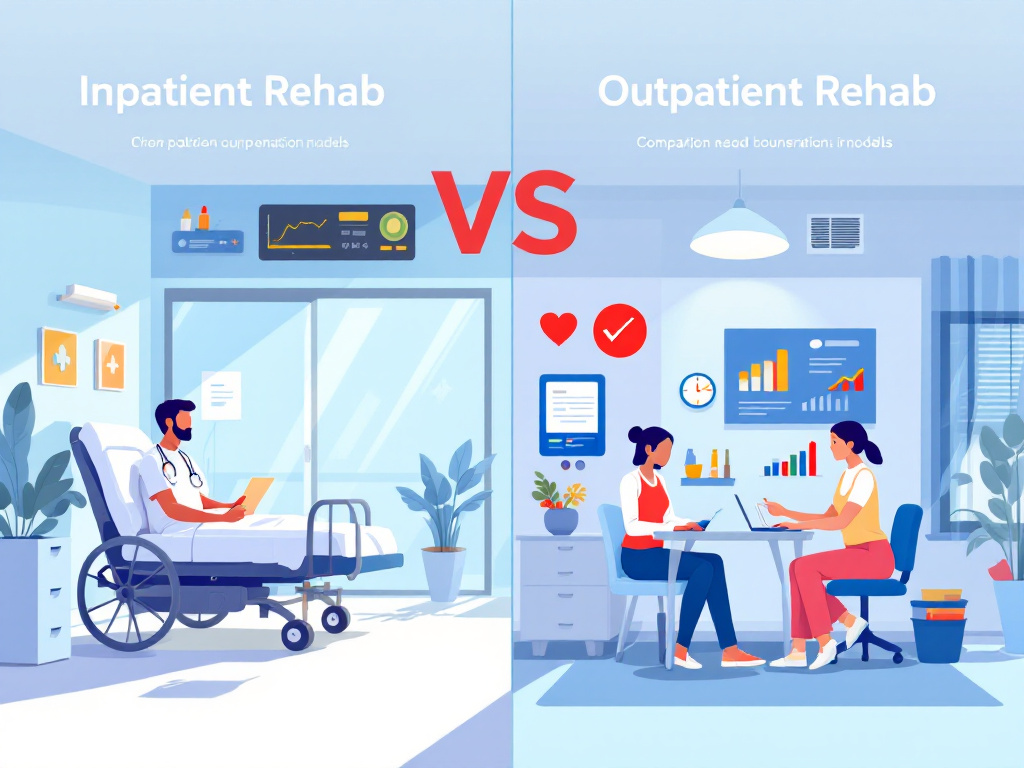
When you’re comparing treatment models, an inpatient vs outpatient rehab comparison can feel overwhelming. You want to understand how each level of care structures your days, what support you’ll receive, and how it means for long-term results. Both settings offer evidence-based therapies and peer connection, but they differ in cost, intensity, and living arrangements. Making an informed choice starts with knowing how each program works and how it aligns with your recovery goals.
In this guide, you’ll learn the fundamentals of inpatient and outpatient care, how to compare program structure and accreditation, and the key success metrics to watch. We’ll also cover cost, length of stay, how to prepare for admission, and steps for transitioning home.
By the end, you’ll have a clear framework for choosing the right rehab model for your situation.
Inpatient rehab fundamentals
Inpatient rehab places you in a residential environment designed to remove you from everyday triggers. You’ll live on-site and follow a structured schedule that balances therapy sessions, group workshops, and holistic activities like meditation or yoga. That round-the-clock setting ensures you have immediate access to counseling and medical care, reducing the risk of relapse during early recovery. For insight into daily routines, explore a typical day in residential treatment.
Most inpatient programs run 28 to 30 days and may extend for several months depending on the level of care you need [1]. This continuity supports a deep dive into the underlying issues driving substance use.
The immersive nature of inpatient treatment often leads to rapid stabilization and intensive skills-building.
Typical daily schedule
Your day in inpatient rehab usually starts early with a community meeting or check-in. You might move from a group therapy session to a one-on-one counseling appointment, followed by educational workshops on coping strategies and relapse prevention. Afternoons often include recreational therapy—exercise, art, or mindfulness—to reinforce new habits. Evenings typically involve peer support groups and quiet reflection time.
Each program will vary its exact timing, but most schedules repeat similar blocks of clinical and personal development activities. This routine creates predictability when life outside felt chaotic. By the time lights-out rolls around, you’ve built structure into every hour of your day.
Medical supervision
One defining feature of inpatient rehab is continuous medical oversight from professionals specializing in addiction and mental health. During medically assisted detoxification, staff manage withdrawal symptoms and adjust medications as needed. That supervision lowers the risk of complications and keeps you safe in those first critical days [2].
After detox, you continue to receive health monitoring, which can include medication management for co-occurring conditions like depression or anxiety. Knowing medical experts are on call provides an extra layer of support as you focus on therapy and recovery.
Outpatient rehab fundamentals
Outpatient rehab allows you to live at home while attending scheduled treatment sessions at a clinic or counseling center. You’ll typically participate in individual therapy, group counseling, family education, and sometimes holistic activities, all while maintaining your daily responsibilities. This model can be less disruptive to work, school, or family life, and it lets you immediately apply coping skills in your real environment.
Outpatient programs can last from two months to over six months, giving you flexibility to progress at your own pace [3].
This flexibility makes outpatient care suitable if you have strong support systems at home and need to balance recovery with other obligations.
Session formats
Outpatient treatment comes in several formats, the most intensive of which is partial hospitalization (PHP). PHP often requires five to six hours of therapy per day, five or six days a week. Intensive outpatient programming (IOP) is a step down—it generally involves three-hour sessions, three to five days per week. Both PHP and IOP offer a mix of individual counseling, group work, and family education designed to reinforce coping skills in a less restrictive setting [2].
Some clinics also provide telehealth options for individual therapy or medication management, adding another layer of convenience. Regardless of format, outpatient care emphasizes accountability and ongoing support without requiring full-time residence.
Compare program structures
When you compare inpatient and outpatient structures, consider how intensity, living situation, and treatment philosophy match your needs. Inpatient programs immerse you in recovery, giving you a break from environmental triggers. Outpatient care lets you practice skills in real time while staying connected to daily life. Each setting offers a different balance of structure and autonomy.
A structured environment can boost accountability and routine, which often accelerates early progress benefits of structured rehab programs. On the other hand, outpatient models train you to navigate recovery while facing real-world stressors. Ask about the daily schedule, group sizes, and therapy modalities to ensure they align with your preferences and treatment goals.
Evaluate accreditation standards
Accreditation is a key indicator of quality and safety in rehab centers. Accredited programs meet nationally recognized standards for staff qualifications, clinical protocols, and outcome tracking. Understanding these benchmarks will help you vet facilities more effectively understanding accreditation in rehab.
Beyond accreditation, look for licensure by state health departments and memberships in professional bodies like the Joint Commission. These affiliations assure you that the center follows evidence-based guidelines. Always review a facility’s track record and ask about its success metrics to gauge overall program quality.
Understand cost and duration
Cost comparison
| Program type | Average cost | Duration |
|---|---|---|
| Inpatient rehab | \$6,000–\$30,000 (30-day) [4] | 28–30 days |
| Outpatient rehab | \$2,000–\$10,000 [4] | 2–6 months |
| Medical detox | \$300–\$800 per day [4] | Variable |
Costs vary by location, amenities, and level of medical supervision. Insurance may cover a portion of these expenses, so verify your benefits before committing.
Length of stay
Inpatient rehab typically lasts 28 to 30 days [1], though some centers offer extended stays of up to 90 days or more for complex cases. Residential treatment programs range from 3 to 6 weeks for short-term care and 6 to 12 months for long-term therapy [1]. Outpatient models usually require a minimum of two months and can extend beyond six months based on your progress and support needs [3]. This variation makes it essential to compare the length of stay in addiction treatment across programs and understand how it fits your recovery timeline.
Measure success metrics
Short-term success
Success in early recovery often centers on treatment completion and initial sobriety rates. Studies suggest inpatient and IOP treatments offer similar short-term benefits, though those requiring medical detox or intensive support may fare better in inpatient settings [5]. A retrospective study also found that inpatients were three times more likely to complete treatment than outpatients [6].
Tracking these outcomes helps you gauge a program’s consistency and efficacy—you can compare centers using rehab success rate comparisons.
Long-term recovery factors
Long-term sobriety often hinges on ongoing support, aftercare planning, and involvement in peer-led recovery communities. Programs that include stepped-down outpatient services or alumni networks can improve sustained abstinence. Research shows that beginning in inpatient care and then transitioning to outpatient support yields better outcomes in the first six months, though the advantage may narrow over time [6]. When you evaluate long-term recovery factors, ask about relapse prevention strategies, family involvement, and referrals to community resources.
Prepare for treatment
Admission planning
A smooth admission starts with gathering medical records, insurance information, and prescriptions. Confirm logistics like your start date, transportation, and any required pre-screening tests. Clear communication with the intake coordinator will help you understand program rules and expectations preparing for treatment admission.
Packing essentials
Most facilities provide a packing list, but essentials typically include comfortable clothing, toiletries, and any prescribed medications. Avoid packing prohibited items like electronics with internet access. Review the center’s guidelines so you arrive ready to focus on recovery what to bring to rehab.
Transition home after rehab
Craft a recovery plan
Before discharge, work with your clinical team to develop an actionable aftercare plan. This should outline therapy appointments, support group meetings, and emergency contacts. A well-structured plan reduces uncertainty and helps you apply new coping skills in daily life building a recovery plan after treatment.
Stay connected
Maintaining accountability through regular check-ins with counselors, sponsors, or peer mentors is critical. Consider outpatient counseling, sober living environments, or virtual support meetings if in-person options are limited. Staying connected to recovery communities can bridge the gap between structured treatment and independent living transitioning home after rehab.
Recovery is a journey rather than a single event. Whether you choose inpatient or outpatient rehab, understanding program structures, accreditation, cost, and success metrics will empower you to make the best decision for your long-term sobriety. By preparing thoroughly and planning your transition home, you set the stage for sustained recovery and a healthier future.